THE STATE OF SIERRA LEONE Vs LANSANA DUMBUYA Esq. SECRETARY GENERAY ALL PEOPLES CONGRESS.
THE STATE OF SIERRA LEONE Vs LANSANA DUMBUYA Esq. SECRETARY GENERAY ALL PEOPLES CONGRESS.
By: Israel Ojekeh Parper Snr.

On Thursday 12th February 2026, The Secretary General of the All Peoples Congress (APC), Barrister and Solicitor of the Sierra Leone Courts Lansana Dumbuya Esq., was charged by the Sierra Leone Police, with three counts of Incitement, insulting conduct, and public insult against the President (Julius Maada Bio). He was remanded in Prison after being refused Bail when he appeared at Magistrates court on 12 February 2026; the charges came about from Dumbuya’s political remarks and chants at the All-Peoples Congress Party Mammoth meeting at the Attouga Mini Stadium, Eastern Freetown on 31 st January 2026.
Let us examine under what Laws or statutes these charges arose?
The legal foundation for each of the three charges brought against Lansana Dumbuya, are based on the publicly reported court filings and the statutes cited in those reports.
Laws under which the charges arise
Based on the information available from credible news sources, the charges against the APC National Secretary General arise under the Public Order Act, 1965 (Act No. 46 of 1965) as amended by the Public Order (Amendment) Act, 1973 (Act No. 15 of 1973).
Let us examine a breakdown of each charge and the corresponding statutory basis.
1: Incitement (Contrary to Law)
The charge of incitement is referenced in the court filings as “incitement contrary to law.”
Although the specific section is not quoted in the reports, incitement in Sierra Leonean criminal law generally arises under common law principles or under general offences provisions in the Public Order Act 1965, relating to conduct likely to cause a breach of the peace. The reporting does not cite a specific section for this count. We may find out later.
2: Insulting Language
This charge is explicitly grounded in: Section 2 of the Public Order Act, 1965 (Act No. 46 of 1965).
This section criminalises the use of insulting, abusive, or threatening language in a public place, particularly where it is likely to provoke a breach of the peace.
This is the specific statute cited directly in the indictment, i.e. the formal accusation.
3: Behaving in an Insulting Manner
This charge arises under: Section 12(a) of the Public Order Act, 1965 (Act No. 46 of 1965) as amended by Section 2 of the Public Order (Amendment) Act, 1973 (Act No. 15 of 1973).
This statutory provision criminalises insulting behaviour in a public place, especially when directed at a public authority or likely to disturb public order.
This is also very clearly cited in the court filings.
4: Additional Context
So far, the reports confirm that the charges stem from the political remarks and chants made at the APC “Mammoth Meeting” at the Brima Attouga Mini Stadium on 31 January 2026, where the APC secretary general, Lansana Dumbuya Esq., allegedly encouraged supporters to chant derogatory phrases about the President, which referred to the 2023 elections.
These actions were interpreted by the State as falling within the scope of the Public Order Act’s prohibitions on insulting language and behaviour.
WHAT DOES ALL THIS MEAN IN PLAIN LANGUAGE?
Let me venture to give a simple Plain‑Language Explanation of the Relevant Sierra Leone Laws
The charges against the APC National Secretary General Lansana Dumbuya Esq., come from the Public Order Act, 1965, as amended in 1973. Here is what each relevant section means in everyday language.
A. Section 2 — Insulting or Abusive Language
What it criminalises:
Using insulting, threatening, or abusive language in a public place in a way that could provoke a breach of the peace.
In Plain‑language this means: If you use harsh or insulting words (‘bad words’ in Krio) in public, and those words could realistically cause disorder, violence, or public disturbance, you may be committing an offence.
So, what are the Key elements the prosecutors must prove: the prosecution must prove that:
1- The language was insulting/abusive
2- It was used in a public place
3- It was likely to provoke a breach of the peace.
B. Section 12(a) — Insulting Behaviour (as amended in 1973)
What it criminalises:
Behaving in an insulting, abusive, or provocative manner in a public place, especially where such behaviour could disturb public order.
In Plain‑language this means:
Even if you do not use specific words, your conduct — gestures, chants, actions — can be criminal if it is insulting and likely to cause public disorder.
Here, are the Key elements the prosecutors must prove:
1 - The behaviour was insulting or provocative.
2 - It occurred in a public place
3 - It was likely to disturb public order.
C. Incitement (This is a Common Law Offence)
Unlike the other two, incitement is not tied to a specific section of the Public Order Act.
What it criminalises, are the following:
1 - Encouraging, persuading, or provoking others to commit an offence.
In Plain‑language meaning: If you urge a crowd or individuals to break the law — even if they do not actually do it — you can be charged with incitement.
Key elements which the prosecutors must prove are:
1 - The accused encouraged others to commit an offence.
2 - The encouragement was intentional.
3 - The offence encouraged is itself unlawful.
In the case of the APC Secretary General, Lansana Dumbuya, the Sierra Leone Police / the State alleges that the chants and remarks at the APC Mammoth meeting, encouraged supporters to engage in conduct considered unlawful under the Public Order Act 1965 as amended in 1973.
Now, let us Compare what obtains so far, with International Free‑Speech Standards: How does the actions of the Police/State compare with international best Free-Speech Standards?
To understand the tension, it will help to compare Sierra Leone’s Public Order Act with global norms.
A. International Covenant on Civil and Political Rights (ICCPR)
Sierra Leone is a party to the ICCPR. Article 19 — Freedom of Expression
Protects:
1 - Political speech
2 - Criticism of public officials
3 - Peaceful dissent
There are four (4) Restrictions to be observed!
1 - Provided by law
2 - Necessary
3 - Proportionate
4 - For legitimate aims (public order, national security, etc.)
So, how does the Sierra Leone Public Order Act compare to international standards? Shortfalls:
1 - Broad and vague language (“insulting”, “abusive”, “provocative”) is generally discouraged in international law because it can be used to suppress political speech.
2 - Criminalising “insults” against public officials is considered incompatible with Article 19 by the UN Human Rights Committee.
3 - Many countries have repealed similar “insult laws” because they chill political expression.
B. African Charter on Human and Peoples’ Rights (ACHPR)
Article 9 — Freedom of Expression, Protects the right to express opinions within the law.
Si, most African Courts and Commission/jurisprudence:
1 - Criminal defamation and insult laws are viewed as disproportionate.
2 - Public officials must tolerate a higher degree of criticism.
C. Comparative Jurisdictions: Examples.
National Status of “insulting the president” laws
Ghana - Repealed “insult laws” in 2001
Kenya. - Courts have struck down similar provisions
South Africa - Strong constitutional protection for political speech
UK. - Public Order Act focuses on threatening or abusive conduct, not mere insults
The Trend now is that Modern democracies are moving away from criminalising political insults.
BREACH OF THE EUROPEAN CONVENTION ON HUMAN RIGHTS (ECHR).
Although Sierra Leone is not a contracting state to the European Court of Human Rights, the principles embodied in the European Convention on Human Rights reflect internationally accepted standards of democratic governance.
The arbitrary arrest and detention of an opposition political figure for political speech would violate:
Article 10 ECHR — Freedom of Expression, particularly political speech;
Article 5 ECHR — Protection against arbitrary deprivation of liberty;
Article 7 ECHR — Protection against double punishment (ne bis in idem).
The European Court has consistently held that political expression attracts the highest level of protection and that detention used as a response to political criticism is incompatible with democratic principles.
SO, WHAT DEFENCES ARE OPEN TO THE ACCUSED?
Likely Defences Available to Lansana Dumbuya
Below I will examine the strongest and most plausible defences, grouped into substantive, constitutional, and procedural categories.
1 Substantive Defences (Focusing on the Elements of the Offence)
The defence team must argue that the prosecution cannot prove the legal ingredients of the charges.
A. The Words or Conduct Were Not “Insulting” Within the Meaning of the Act
The Public Order Act uses vague terms like insulting, abusive, and provocative. Lansana Dumbuya and his legal team can argue that:
1 Political chants at a partisan rally/meeting are normal political expression, not “insults” in the criminal sense.
2 The words were not directed at an individual personally, but at a political office or political situation with particular reference to the unsettled 2023 elections results.
3 The interpretation of “insult” must be strict and narrow, not subjective or politically influenced.
Courts all over the world often require a high threshold for criminal insult.
B. There was no Likelihood of a Breach of the Peace, at the event.
Both Section 2 and Section 12(a) require that the language or behaviour be likely to provoke a breach of the peace.
The defence lawyers should argue that:
1- The rally/ mammoth meeting was peaceful.
2- No violence occurred.
3- The crowd did not react in a disorderly way.
4- The State cannot rely on hypothetical or speculative risks.
5- Political rallies/meetings worldwide, routinely involve chanting and slogans — this is not inherently disorderly.
The prosecution must show beyond reasonable doubt, a REAL LIKELIHOOD OF DISORDER. If they cannot do so, that charge collapses and must be dropped.
C. The Conduct Was Not “Incitement”!
For incitement, the State must prove:
1- Intent to encourage others to commit an offence.
2- Actual encouragement of a specific unlawful act.
The defence lawyers must argue/emphasise that:
1- The chants were political slogans, not instructions to commit crimes.
2- There was no call to violence, no call to riot, no call to break the law.
3- The prosecution cannot identify which offence the accused allegedly encouraged.
4- The crowd did not act unlawfully.
This is defence is very important because incitement requires clear, intentional encouragement.
2 - Constitutional Defences (Freedom of Expression)
The following are now the most potent arguments in a modern democratic context. For Sierra Leone:
A. Section 25 of the 1991 Constitution — Freedom of Expression
The defence team can argue that:
1- Political speech is the highest form of protected expression.
2- Criticism of the President is not a crime in a democratic society.
3- Criminalising political chants violates the constitutional guarantee of free expression.
4- Any restriction must be justifiable in a democratic society — most courts in most jurisdictions normally put a high bar in this context, and Courts in Africa are now increasingly striking down “insult laws” on constitutional grounds.
B. International Human Rights Law (ICCPR & African Charter)
Sierra Leone is bound by:
1- ICCPR Article 19
2- African Charter Article 9
Both protect political expression and discourage criminal sanctions for “insults” against public officials.
Lansana Dumbuya’s legal defense team’s argument must strongly argue that:
1- The Public Order Act provisions are overbroad, vague, and disproportionate.
2- Criminalising political criticism violates Sierra Leone’s international obligations.
3- The President, as a public figure, must tolerate greater scrutiny and criticism.
As a member of the Commonwealt, Sierra Leone’s Courts often consider Commonwealth and other international law jurisdictions when interpreting constitutional rights. So the defence must tap into this.
3 - Procedural and Evidential Defences.
These challenge the fairness or legality of the process.
A. Lack of Proper Mens Rea (Intent)
The defence lawyers can argue:
1- Dumbuya did not intend to provoke disorder.
2- His intent was political mobilisation, not incitement.
3- The prosecution must prove intent beyond reasonable doubt.
B. Selective or Politically Motivated Prosecution
This is a sensitive but purely legitimate defence:
1- The law is being applied selectively against opposition figures.
2- Similar statements by ruling‑party supporters are not prosecute.
3- This violates principles of equality before the law and non- discrimination.
Whilst some Courts may not acquit solely on this basis, it does strengthen constitutional arguments.
C. Abuse of Process
If the defence team can show that:
1- The charges were brought for political purposes,
2- The process is being used to silence opposition, and that
3- The prosecution is oppressive or unfair,
then the court may be obliged to stay the proceedings.
D. Insufficient Evidence
The defence team can also challenge:
1- The accuracy of recording,
2- The context of the statements,
3- The interpretation of the chants,
4- The reliability of witnesses,
If the evidence is weak or ambiguous, the charges may fail.
4 - Public Interest Defence.
Lansana Dumbuya’s defence team can also argue that the
1- Criminal prosecution of political speech is not in the public interest.
2- The matter could be addressed through political dialogue, not criminal law.
3- The State should not use criminal sanctions to police political rhetoric.
This is necessary and persuasive in fragile democracies, seeking to avoid political tension and social unrest.
5 - Defence Based on the Nature of Political Speech
Courts worldwide recognise:
1- Political speech is often robust, emotional, and hyperbolic.
2- It should not be judged by the same standards as private insults.
3- Political rallies are spaces for expressive freedom, not criminal liability.
This defence reframes the entire context of the rally or meeting.
FINNALY.
VIOLATION OF THE PROTECTION AGAINST DOUBLE PUNISHMENT.
Section 23(9) of the 1991 Constitution of Sierra Leone provides that no person shall be tried or punished again for an offence for which he has already been punished.
The material facts are not in dispute:
The Political Parties Regulation Commission imposed a fine of Le 200,000 on the APC.
The fine was paid in full.
The Secretary-General is now being prosecuted based on the same factual foundation — statements made in a political context.
Although the State may argue that the party and the individual are distinct legal persons, the Court must examine substance over form. Where an administrative penalty and a criminal prosecution arise from the same factual matrix and target the same political expression, the cumulative effect amounts to impermissible double punishment. The Constitution guards against oppressive multiplicity of sanctions.
VIOLATION OF FREEDOM OF EXPRESSION
Section 25(1)(a) of the Constitution guarantees freedom of expression, including the right to hold and impart opinions without interference.
The statement attributed to the Secretary-General is:
Political speech,
Expression concerning electoral integrity,
Commentary on governance.
Political speech lies at the heart of constitutional democracy and enjoys the highest level of protection.
FAILURE TO ESTABLISH INCITEMENT
To sustain a charge of incitement, the prosecution must prove:
Intention to encourage or provoke unlawful conduct;
A likelihood of imminent disorder;
A direct nexus between the words used and potential violence.
Mere criticism, strong language, or political allegation does not amount to incitement.
There is no evidence that the Secretary-General:
Called for violence;
Urged insurrection;
Directed unlawful action;
Incited public disorder.
Absent a clear and present danger to public order, criminalising such speech is disproportionate and unconstitutional.
In democratic societies, disputes over election outcomes are resolved through election petitions, political discourse, or civil remedies—not criminal prosecution.
CONCLUSION
The arrest and remand and prosecution of the Secretary-General, following the prior imposition and payment of an administrative fine based on the same political expression, represents a disproportionate and punitive escalation of state power.
Where speech contains no call to violence, no incitement to disorder, and no imminent threat to public safety, criminal prosecution and detention amount to suppression of dissent rather than enforcement of law.
Such action offends constitutional guarantees, undermines democratic space, and falls below internationally recognised human rights standards.
A democracy must be robust enough to tolerate criticism. The criminal law must never become an instrument for silencing political opposition.
—————————————————
I WILL NOW TURN TO LEGAL DECISIONS - CASE LAW CITATIONS IN BOTH SIERRA LEONE AND MOSTLY UK THAT MAY BE RELEVANT TO THIS CASE: The State of Sierra vs Lansana Dumbuya Esq.
In matters involving insulting language, insulting
behaviour, breach of the peace, and incitement,
courts in Sierra Leone and England have developed a body of case law that can
be persuasive or directly relevant to the
issues raised in the Lansana Dumbuya matter.
Below is a structured set of relevant case citations, divided into:
1- A. Sierra Leone cases,
2- B. English (common‑law) cases,
3- C. How each case helps the defence.
A - SIERRA LEONE CASE LAW
1. Baindu Kanna Case (Magistrates’ Court, Kenema, 2024)
Citation: Court Orders Villager to Pay NLe 600 or Serve Four Months in Jail (Magistrates’ Court No. 3, Kenema, 13 Dec 2024) 1
Relevance:
(a) Defendant convicted of abusive language, public insult, and insulting conduct under the same Public Order Act provisions.
(b) Court emphasised:
o The prosecution must prove the words were insulting and
o Likely to provoke a breach of the peace.
(c) Shows the threshold for conviction and the type of evidence required.
Defence use:
1- Demonstrates that courts require clear, direct, personal insults and proof of likely breach of peace.
2- Rally chants directed at a political office, not a private individual, may not meet this threshold.
2. Sierra Leone Legal Information Institute (SierraLII) Judgments
Although the search results list recent cases, it does not show up any case directly concerning insulting language. However, SierraLII is the authoritative repository for Sierra Leone case law. 2
Defence use:
1- SierraLII can be used to locate older cases on breach of peace, public order, and constitutional interpretation.
2- Particularly useful for arguments on proportionality, freedom of expression, and abuse of process.
B - ENGLISH (COMMON‑LAW) CASES
Because Sierra Leone inherited the common‑law tradition, English cases are still persuasive authority, especially on:
(a) Insulting words
(b) Breach of the peace
(c) Public‑order offences
(d) Incitement
(e) Freedom of expression
Here are the most relevant examples:
1. R v Chief Constable of Devon and Cornwall, ex parte Central Electricity Generating Board [1982] QB 458
Principle:
Breach of the peace requires actual or imminent violence, not mere
offensive or insulting words.
Defence use:
(a) Supports argument that no breach of peace was likely at the APC rally.
(b) Political chants alone cannot satisfy the threshold.
2. R v Howell [1982] QB 416
Principle:
Defines breach of the peace as requiring:
(a) Harm,
(b) Threat of harm, or
(c) Fear of harm.
Defence use:
(a) Reinforces that insulting language alone is insufficient.
(b) No violence occurred at the rally.
3. Brutus v Cozens [1973] AC 854 (House of Lords)
Principle:
(a) The meaning of “insulting” is a question of fact, not law.
(b) Courts must consider context, audience, and social norms.
Defence use:
(a) Political rallies involve robust speech.
(b) What is “insulting” in private may not be insulting in political context.
4. Redmond‑Bate v DPP [1999] EWHC Admin 733
Principle:
(a) Freedom of expression protects even offensive, shocking, or disturbing speech.
(b) Police cannot restrict speech merely because others may react badly.
Defence use:
(a) Strong authority for political speech protection.
(b) Criminalising chants violates democratic norms.
5. R v Marlow [1997] Trim LR 897
Principle:
Incitement requires intentional encouragement of a specific
offence.
Defence use:
(a) No evidence that Dumbuya intended to encourage unlawful acts.
(b) Political chanting ≠ incitement.
6. DPP v Orum [1989] 1 WLR 88
Principle:
Insulting words must be directed at a person and likely to
provoke immediate violence.
Defence use:
(a) Chants directed at a political office, not a private individual.
(b) No immediate violence occurred.
C - HOW THESE CASES HELP THE DEFENCE
1. They raise the threshold for “insulting”
(a) Brutus v Cozens shows that context matters.
(b) Political rallies are high‑tolerance environments.
2. They limit “breach of the peace”
(a) Howell and Devon & Cornwall require real or imminent violence.
(b) No such violence occurred.
3. They protect political speech
(a) Redmond‑Bate is powerful: offensive speech is still protected.
4. They narrow incitement
(a) Marlow requires intent to encourage a specific crime.
(b) No such intent is evident.
5. They support proportionality
(a) English courts emphasise that criminal law should not be used to police political expression.
D - SUMMARY TABLE
|
Issue |
Sierra Leone Case |
English Case |
Defence Benefit |
|
Meaning of “insulting” |
Kanna Case |
Brutus v Cozens |
Context matters: political speech protected |
|
Breach of peace |
Kanna Case |
Howell; Devon & Cornwall |
Requires real threat of violence |
|
Incitement |
— |
R v Marlow |
Intent must be proven |
|
Freedom of expression |
— |
Redmond‑Bate |
Offensive political speech is protected |
|
Double punishment |
— |
— |
Supports proportionality arguments |
E -CONCLUSION
There are strong, relevant, persuasive authorities from both Sierra Leone and England that support:
1- A narrow interpretation of “insulting”
2- A high threshold for breach of peace
3- Strong protection for political speech
4- Strict requirements for incitement
5- Concerns about proportionality and fairness
These cases significantly strengthen the defence’s position.

Author: Israel Ojekeh Parper Snr. BSc(Hons); ACIB; AFA; Grad.Dip (Ed); PGCE; DipTLLS, MBIM, MREconS. (Lecturer in Further and Higher Education; Author, Community Relations and Musician.
—————————————————
Observations and comments
The Remand of Lansana Dumbuya
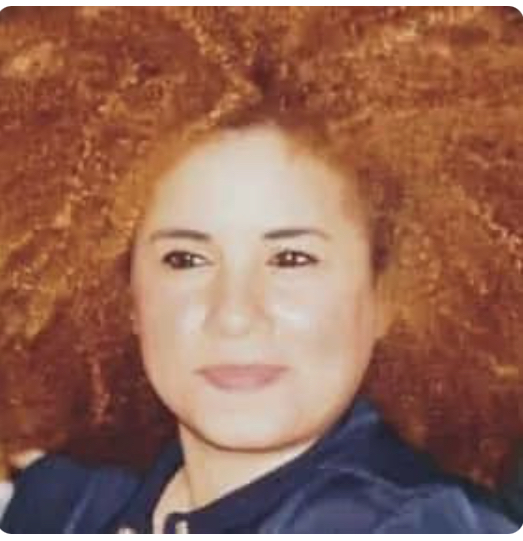
Lawyer Basita Michael
On February 12, 2026, we witnessed an unsettling moment at Pademba Road Magistrate Court No. 1, one that should give every citizen pause, regardless of political affiliation. Lansana Dumbuya Esq., National Secretary General of the All Peoples’ Congress (APC), stood before Magistrate Mustapha Brima Jah to answer charges of incitement and insulting behaviour. His alleged offence was a political statement made at a rally on January 31, where he accused President Julius Maada Bio of “stealing” the 2023 elections. He pleaded not guilty.
Despite a strong legal argument invoking constitutional protections and the recently enacted Criminal Procedure Act, bail was denied. Dumbuya was remanded to Pademba Road Prison, a decision that has raised more questions than answers. The matter resumes on February 16, but the implications for public trust may endure far beyond that date.
This case is not a routine legal proceeding. It carries the unmistakable scent of political interference at a time when #SierraLeone is still navigating the tensions of disputed elections and fragile tripartite dialogue. The Political Parties Regulation Commission (PPRC) had already fined the APC NLe 350,000 for the same remarks, a penalty the party paid on February 11. @PPRCSL
To then pursue criminal charges for the same conduct appears excessive and unnecessary. It risks creating the perception of double punishment, undermining the purpose of administrative remedies and raising concerns about selective enforcement. In any democracy, opposition leaders must be able to challenge those in power without fear of imprisonment, especially when their words have not led to public disorder.
Sierra Leone’s 1991 Constitution is clear. Section 23(4) guarantees the presumption of innocence. Section 25 protects freedom of expression, including political speech, one of the most vital pillars of democratic life. Dumbuya’s legal team relied on these provisions, as well as Section 76(1)(c) of the Criminal Procedure Act 2024, which requires bail for offences of this nature unless the prosecution provides compelling reasons supported by affidavit.
While the prosecution did file an affidavit, they simultaneously requested for an adjournment due to unreadiness. Yet the court ruled that the matter was at a “crucial stage,” insisting that prosecution evidence must be heard before bail could be considered. This reasoning appears to invert the presumption of innocence, treating the accused as a threat before any evidence has been tested.
It is important to remember who stands accused. Lansana Dumbuya is a barrister and solicitor with 26 years of practice, a human rights advocate, a playwright, and a political leader. He heads his own chambers and has no history of evading justice or interfering with witnesses. His detention, coming just days before the APC’s internal elections, cannot be divorced from the political context.
As Freetown Mayor @yakisawyerr observed, the timing is “deeply troubling.” It risks shrinking the democratic space at a moment when Sierra Leone needs openness, dialogue, and trust-building, not actions that evoke memories of more unfortunate chapters in our history.
We are still grappling with the unresolved tensions of the 2023 elections. In such an environment, the criminalization of political speech does not promote stability; it deepens division.
Democracy cannot thrive where dissent is treated as a crime. The judiciary must be seen as an impartial guardian of justice, not an instrument of political pressure. When citizens lose faith in the courts, the entire democratic project is weakened.
For the sake of national unity, for the credibility of our institutions, and for the future of our democracy, we must demand better from our courts, our Attorney-General and Minister of Justice, our Police, and from our selves.
Credit SierraEye magazine
@sierraeyesalone
————————————————
COMMENTARIES:
7th March 2026
Court Report on sitting of 5th March 2026 courtesy of Sierraeye Magazine
Click link to read.
https://www.facebook.com/share/1DAGdExhmY/?mibextid=wwXIfr


Comments